Why Your Landscape Rock Looks More Like Sand
Rock look more like sand than 3/4" gravel? Learn about rock fines, bad batches, weather issues, and what homeowners can realistically do to fix or prevent it.
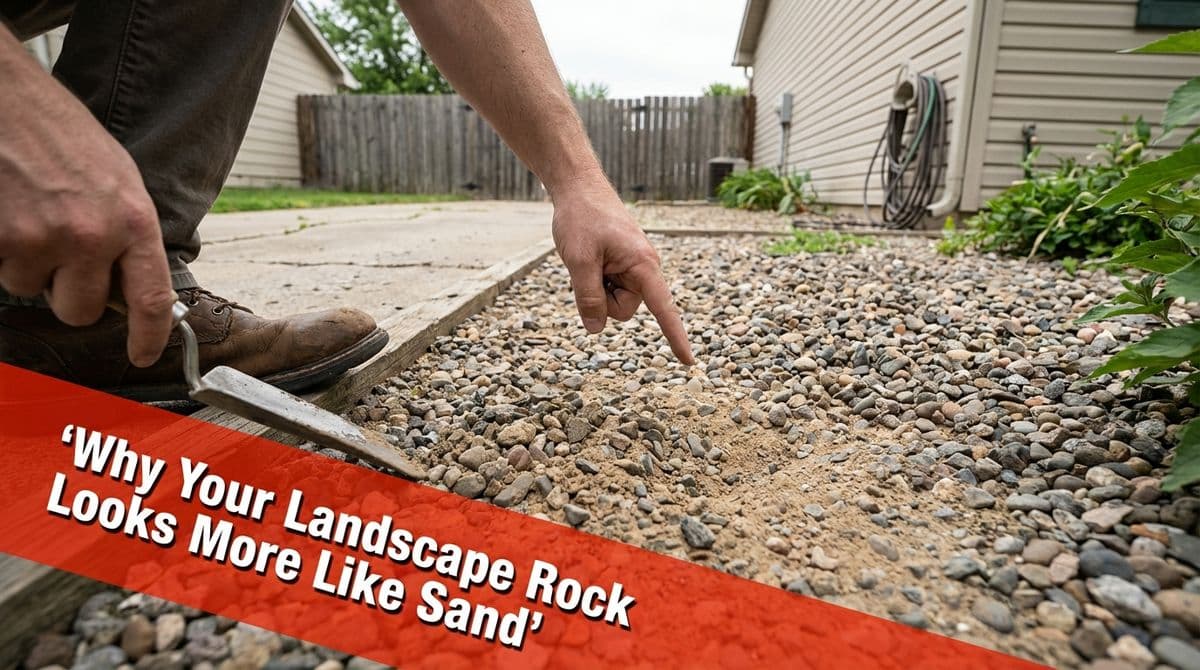
When “Rock” Shows Up Looking More Like Sand
We recently got a call from a customer — let’s call him Brian — who was more than a little frustrated with a recent rock delivery.
He told us, “I bought three-quarter inch rock from you a few weeks ago. But what I got is horrible. It’s sand. It’s sand and quarter-minus mixed in. I’ve never seen anything like it.” He’d ordered about 14 tons, spread most of it already, and was now staring at what looked more like a sandy mess than clean landscape rock.
We walked Brian through what was happening, what we could do about it, and what his realistic options were. At our company, we see this type of situation from time to time — especially after big storms — so we know how confusing and frustrating it can be for homeowners. In this post, we want to share the same explanations and advice we gave Brian, so you know what’s normal and what’s not when it comes to “fines,” bad batches, and sandy-looking rock.
What Are “Fines” In Landscape Rock?
One of the first things we explained to Brian was that almost all rock products come with some amount of fines.
Fines are the small particles — think coarse sand or very tiny gravel — that remain after rock is processed and screened. Even when a product is sold as “3/4-inch” rock, it’s usually sized to up to 3/4", not every single piece exactly 3/4" with nothing smaller.
Here’s what we typically see with screened rock:
- 3/4" decorative rock – Mostly larger pieces, but still some fines mixed in.
- “Minus” products (like 1/4" minus) – Designed to be a blend of small rock and fines so they compact well.
- Unscreened or poorly screened material – Can have a lot more fines than you’d want for a clean decorative finish.
So when our team says, “It’s going to come with fines,” that’s what we mean: a normal, expected amount of smaller material mixed in. The problem is when you get way more fines than usual — to the point your rock looks like sand.
When Is It Just Fines, And When Is It A Bad Batch?
As we talked with Brian and looked at his photos and video, we focused on figuring out whether he had a normal amount of fines or a bad batch.
We look for a few telltale signs:
- Coverage ratio: If your yard looks mostly like rock with some sandy material between the stones, that’s usually fine. If the rock is disappearing into a blanket of sand, that’s a red flag.
- Depth of fines: Dig down an inch or two. If it’s fines all the way down with just a sprinkling of larger rock on top, something went wrong at the plant or during loading.
- Product label vs. appearance: 3/4" rock should be visually dominated by 1/2"–3/4" pieces. If it looks more like a quarter-minus (lots of tiny pieces) than a three-quarter, that’s not normal.
In rare cases, like we explained to Brian, the loader at the plant can dig too deep and scoop up dirt, sand, and leftover fines along with the rock. After big rainstorms, fines can also wash down and collect in certain spots, so if the loader hits those, you get a “hot load” of sand and fines mixed in with your rock.
How Weather And Timing Can Affect Your Rock
One of the questions we asked Brian was whether he ordered during or right after heavy rain. He thought it might have been raining when the material was loaded.
Rain matters because:
- Water stirs up fines and can cause them to settle in pockets around the stockpile.
- Wet fines clump together, making them more obvious when they’re dumped in your yard.
- Loader operators’ visibility drops in bad weather, and it’s easier to accidentally dig into lower-quality material.
None of this excuses a bad batch, but it does explain why we sometimes see complaints spike after storms. When we hear a story like Brian’s, that’s one of the first details we check.
What We Do When A Customer’s Rock Looks Wrong
When someone calls us with a concern like Brian’s, we don’t just shrug and say “It comes with fines.” We take a few clear steps:
- Ask for photos or video so we can see the material up close and get a sense of how bad the issue is.
- Confirm the product and tonnage — what was ordered, how much, and when it was delivered.
- Check plant and weather conditions around the time of loading to see if there were storms or known issues.
- Inspect in person when needed. If the pictures look questionable, we’ll schedule a time to stop by and take a look ourselves.
From there, we talk honestly with the homeowner about what’s realistic. With Brian, like with others, most of the rock was already spread. At that point, it becomes less about swapping material and more about what can we do now to make it better.
What Homeowners Can Do If Rock Looks Too Sandy
If you’re in the same boat as Brian and your “rock” looks more like beach sand, here are some practical steps we recommend:
- Take clear photos and video immediately — wide shots of the yard and close-ups showing the ratio of rock to fines.
- Don’t spread all of it yet if possible. Leave at least one untouched pile so your supplier can see the raw material.
- Do a shovel test: Scoop a shovelful, shake it gently, and see how much rock is left compared to fines. This helps us judge how bad it is.
- Reach out to your supplier quickly with your order details and photos. The sooner we see it, the more options we usually have.
For improving what’s already on the ground, we often suggest:
- Raking and redistributing to pull larger rock to the surface and push fines down.
- Adding a thin top layer of cleaner rock to improve the look and feel, if the base is structurally sound.
- Using fines to your advantage in walkways or under pavers where a compacted base is actually helpful.
How To Avoid This Problem On Future Rock Orders
We tell our customers all the time: a few simple steps before you order can save a lot of headaches later.
- Ask how much fines to expect with a particular product before you commit.
- Request current photos of the rock from the yard if you’re unsure, or come by and see it in person.
- Avoid scheduling large deliveries right in the middle of major storms when possible.
- Clarify your expectations: If you want a very clean, decorative look, tell us so we can point you to the best product.
As a supplier, we take pride in helping homeowners get the right material the first time — and standing behind it when something goes wrong. If your rock looks more like sand and you’re not sure if it’s normal, reach out. We’re always happy to take a look, explain what’s going on, and work with you on the best path forward.