Choosing Landscape Rock for RV Access & Pool Yards
We helped a homeowner choose the right rock for an RV access and pool yard. Here’s how to pick the best size, style, and price for your own project.
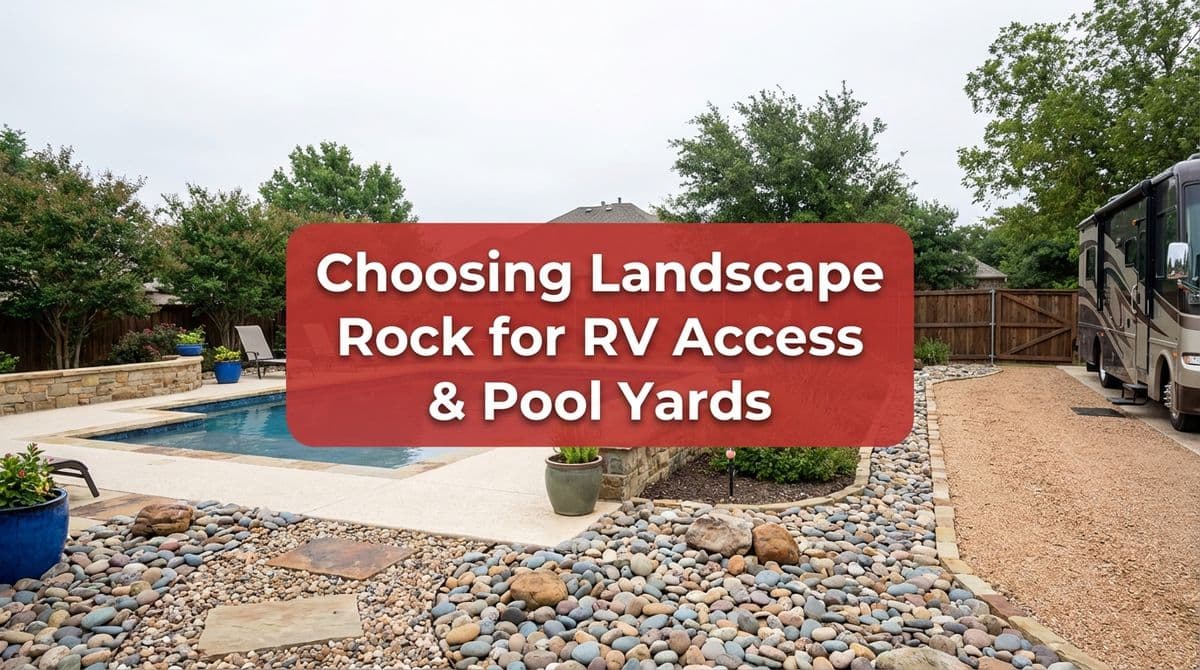
Rock Choices for RV Access and Pool Yards: What Really Matters
We recently got a call from a homeowner — let’s call him Brian — who was trying to finish off his backyard after putting in pavers from his RV gate all the way back to his new pool. The pool looked great, but everything else was still dirt.
Brian wanted rock to cover the RV access area and was thinking about rock around the pool but wasn’t sure. He asked about half-inch mineral gray, pea gravel, cost per ton, and whether smaller rock would be more comfortable to walk on. Those are smart questions, and they’re the same ones we hear all the time.
In this post, I’ll walk you through the same advice we gave Brian: how to choose the right rock size, style, and budget for RV access areas and pool yards — and what to think about for comfort and maintenance.
Rock Size: Half-Inch vs One-Inch vs Pea Gravel
The first thing Brian asked for was ½" mineral gray for his RV access. Then we got into whether that was the best size if he’d be walking on it regularly.
For RV Access and Drive Lanes
For RV pads, side yards, and drive lanes, we usually recommend a larger rock instead of tiny gravel:
- 1" decorative rock (like 1" mineral gray) – Great for RV access and side yards. It locks together better, doesn’t move around as much, and gives a nice textured look.
- ½" decorative rock – Looks clean, but it’s easier to kick around with your feet or tires. If you drag your feet at all, it tends to shift and leave bare spots.
I told Brian what I tell most people: if you’re going to be walking or driving through the area often, 1" rock is usually more stable and lower maintenance than ½" rock.
For Pool Surrounds and Footpaths
Pool areas are a little different because bare feet are part of the equation.
- Pea gravel (⅜"–½" natural river rock) – Smooth and rounded, more comfortable under bare feet than sharp crushed rock. The trade-off is that it can roll around more.
- ½" decorative rock – Looks tidy and drains well, but if it’s a crushed stone it can feel sharper on bare feet.
- 1" decorative rock – Great for visual borders and beds around the pool but not ideal where you’ll stand or play a lot.
Brian was still undecided between rock and artificial turf near the pool. For anyone in that situation, we usually suggest this combo: turf or hardscape in high-traffic zones and decorative rock in planting beds and along the fence lines.
Style: Mineral Gray vs Natural River Rock
On the call, Brian asked about a “salt and pepper” pea gravel to match mineral gray. That’s a common request, but in our area, true color-matched pea gravel usually isn’t available. What we do have are:
- Mineral gray – Crushed decorative rock in ½", ¾", and 1" sizes. More angular, modern look, good traction for RV access and side yards.
- Natural river pea gravel – Rounded, mixed tan/gray/brown tones. Softer look, great near water features and for more natural-style yards.
For Brian’s RV access, mineral gray was the better choice. For anywhere people might be barefoot or where he wanted a softer, natural look, pea gravel would work well — even if the colors don’t match perfectly.
Comfort and Maintenance Considerations
When you’re choosing rock, don’t just think about color. Ask yourself:
- How often will we walk here, and with what? Bare feet, shoes, or tires?
- Do I want a clean, modern look or a soft, natural feel?
- How much raking and leveling am I willing to do?
Here’s how that usually plays out:
- RV access & side yards: ¾"–1" angular rock for stability and fewer bare spots.
- Pool borders & planters: ½"–1" decorative rock or pea gravel, depending on whether you prefer modern or natural.
- Play areas & bare-foot paths: Rounded pea gravel or turf/hardscape.
Cost: What Impacts Your Price Per Ton
Brian needed about 8 tons of rock for his RV access, so we walked him through pricing. The main factors are:
- Material type – Decorative crushed rock (like mineral gray) typically costs more per ton than natural river pea gravel.
- Delivery zone – Distance from the quarry and your address can raise or lower delivery fees.
- Total tonnage – Larger loads spread delivery cost over more material.
In his case, the mineral gray was priced higher per ton, while the pea gravel was more budget-friendly. That’s common: rounded river rock is often cheaper than specialty colored rock.
If you’re planning both an RV lane and a pool area, one way to save is to use the decorative rock where it’s most visible and consider more economical options (like natural river gravel) in low-visibility or low-traffic zones.
Should You See Rock in Person First?
Brian asked if he could stop by to look at the rock in person — and we always encourage that. Photos are helpful, but:
- Color can look different in shade vs full sun.
- Size feels different when you actually pick it up.
- You can test how it feels underfoot and see how it compacts.
When you visit a yard, ask to see:
- Actual stock piles of each size and color
- Any leftover batches of pea gravel or specialty rock
- Samples in trays that show how it looks when spread out
Need Help Planning Your RV Access or Pool Yard?
If you’re like Brian and staring at dirt between your new pavers and pool, we’re happy to walk you through options. Tell us how you’ll be using the space, whether you’ll be walking barefoot, and your budget, and we can recommend the best rock size and style — and estimate how many tons you’ll actually need.
Give us a call or stop by the yard, and we’ll help you choose rock that looks good, feels right, and holds up to RVs, kids, and pool parties.